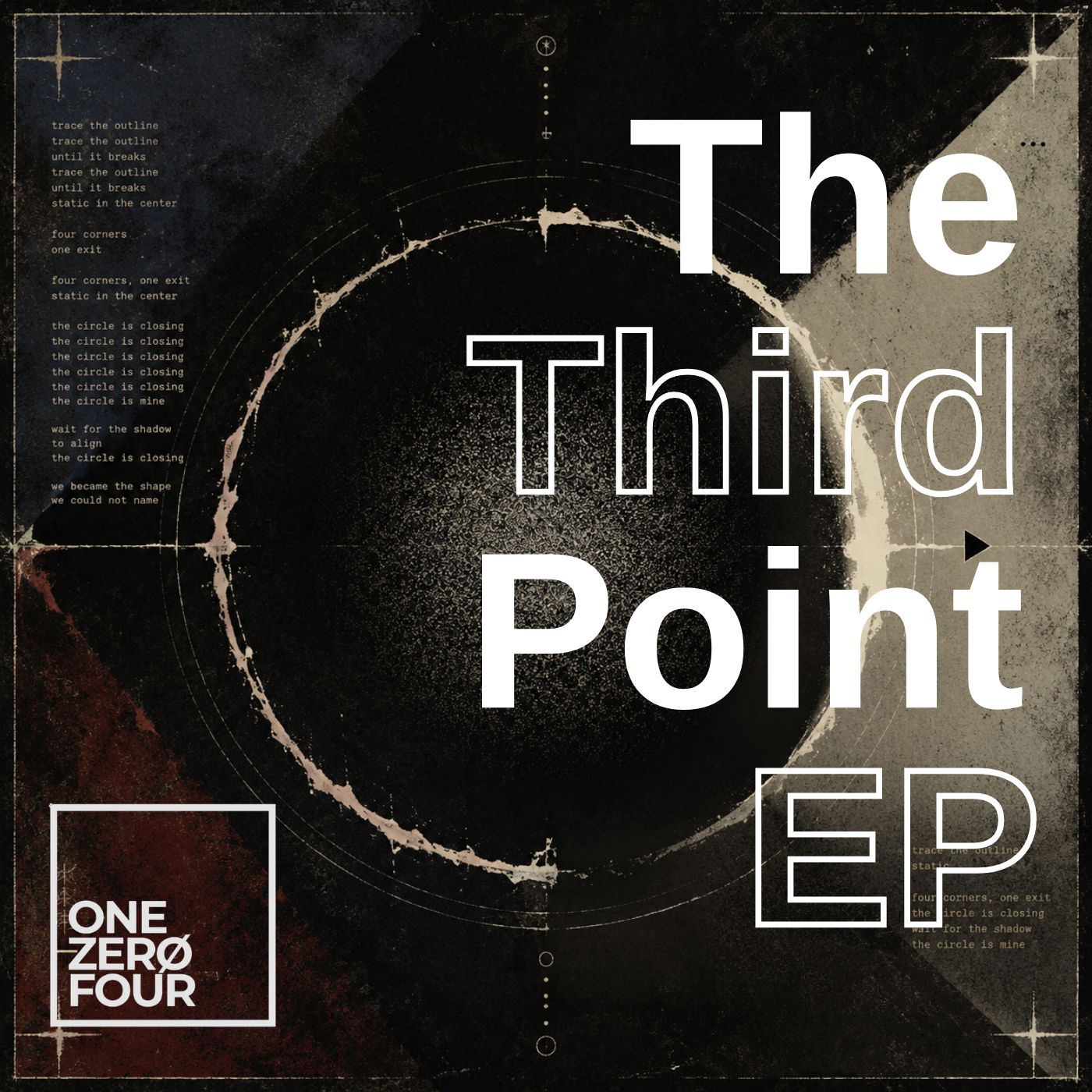
The collection / EP · Progressive House
The Third Point
- Released
- May 11, 2026
- Tracks
- 5 · 37:22
- Genre
- Progressive House
A four-track progressive house EP built around hypnotic repetition rather than dramatic arc. The Third Point and The Weaver's Knot work in the tradition of stripped-back tech-house — 125 BPM, modal harmony, vocals chopped into looping fragments. The Silver Spindle and The Weightless Hour move into cinematic melodic progressive territory — 126 BPM, extended jazz chords, 24-bar atmospheric intros, vocals processed into shimmer-reverbed fragments that drift in like half-remembered things. The four tracks share a vocabulary of geometry, weaving, and suspended states. Inspired in equal measure by Nic Fanciulli's remix of Lusine's "Two Dots" and Sasha's Involv3r remix of Ananda Project's "Moment Before Dreaming," this is music for the deep middle of a long night — designed to loop, breathe, and hold a listener in place long enough to notice what was already there.
Tracklist
-
01 The Third Point
124F minor07:24
Buy
The Third Point: "Hypnotic 125 BPM tech-house built around the geometry of a relationship becoming complicated. The third point is the complication."
- 99 The Third Point (104's Two Dots Edit) 124C minor07:31
-
02 The Weavers Knot
122E minor07:06
Buy
The Weaver's Knot: "Folk imagery threaded through hypnotic deep house. Seven times around the spindle, asking who is weaving and who is worn."
-
03 The Silver Spindle
125G minor07:23
Buy
The Silver Spindle: "Cinematic progressive house with extended jazz harmony and traditional folk imagery. The identity dissolves into the repetition."
-
04 The Weightless Hour
126D minor07:59
Buy
The Weightless Hour: "Pure atmospheric closer. The blue between the worlds. Every memory is a ghost, and every ghost is a wing."
Sleeve notes
The Third Point
The Third Point is a progressive house EP built around hypnotic repetition rather than dramatic arc. Nothing here is designed to peak. The tracks are long, patient, and constructed to hold a listener in place long enough to notice what was already there.
The record splits cleanly in two. The Third Point and The Weavers Knot work in the tradition of stripped-back tech-house—modal harmony, minimal chord movement, and vocals chopped into looping fragments that function as rhythm rather than narrative. The Silver Spindle and The Weightless Hour move into cinematic melodic progressive territory: extended jazz chords, long atmospheric intros, and vocals processed into shimmer-reverbed fragments that drift in like half-remembered things.
All four share a vocabulary of geometry, weaving, and suspended states—circles closing, outlines traced until they break, thread wound seven times around a spindle. The imagery is folk in origin and cold in execution, which is most of what gives the EP its particular temperature.
The reference points are stated plainly: Nic Fanciulli's remix of Lusine's Two Dots, and Sasha's Involv3r remix of Ananda Project's Moment Before Dreaming. This is music for the deep middle of a long night—designed to loop, to breathe, and to stay.
---
Track 1 — The Third Point
Hypnotic tech-house built around the geometry of a relationship becoming complicated. The third point is the complication.
The construction is deliberately cold and geometric: a deep punchy kick, sixteenth-note shakers, offbeat hi-hats, subtle reverbed claps, and a syncopated pluck synth running through delay. Modal harmony with almost no chord movement holds the whole thing in place across more than seven minutes.
The vocal is texture rather than lead. "Two points made a line, then you drew the third" — "we became the shape we could not name." Fragments loop and return until the geometry stops being a metaphor and becomes the actual structure of the track. Melancholic, but never still.
---
Track 2 — The Third Point (104's Two Dots Edit)
The EP's own reworking of its title track, named for the Lusine record whose Fanciulli remix sits behind the whole release.
Where the original holds in F minor, the edit moves to C minor and runs a little longer. The change is not decorative: the same loops, sitting in a different key and given more room, read as colder and further away than they do in their first form.
Placed second rather than saved for the end, it functions as a second look at the same shape before the EP moves on—the record examining its own opening statement from a slightly different angle.
---
Track 3 — The Weavers Knot
Folk imagery threaded through hypnotic deep house. Seven times around the spindle, asking who is weaving and who is worn.
Musically this is the closest relative of the title track—the same modal restraint, the same looping vocal fragments used as rhythmic texture—but the kick is rounder and organic percussion is layered through the arrangement, which softens the geometry without loosening it.
The lyric works entirely by repetition. "Silver needle, golden thread… bind the living to the dead." "Seven times around the spindle." The count never resolves, and the question underneath it—who is weaving and who is being worn down—is never answered.
---
Track 4 — The Silver Spindle
Cinematic progressive house with extended jazz harmony and traditional folk imagery. The identity dissolves into the repetition.
This is where the EP changes register. The tempo lifts slightly, the harmony opens into extended chords, and the intro takes its time before anything rhythmic arrives. Vocals are processed into shimmer-reverbed fragments rather than chopped into rhythm.
The spindle imagery carries over from the previous track, but the perspective has shifted: what was an unanswered question there becomes, here, a dissolution. The repetition stops being something done to the narrator and starts being what the narrator is made of.
---
Track 5 — The Weightless Hour
A pure atmospheric closer. The blue between the worlds.
At just under eight minutes it is the longest thing on the EP and the least driven—the point where the record stops asking for movement altogether and simply occupies its space.
Every memory is a ghost, and every ghost is a wing. After four tracks of circles closing and thread winding tighter, the ending is the one moment where nothing binds: the geometry lets go, and what is left is weightless.