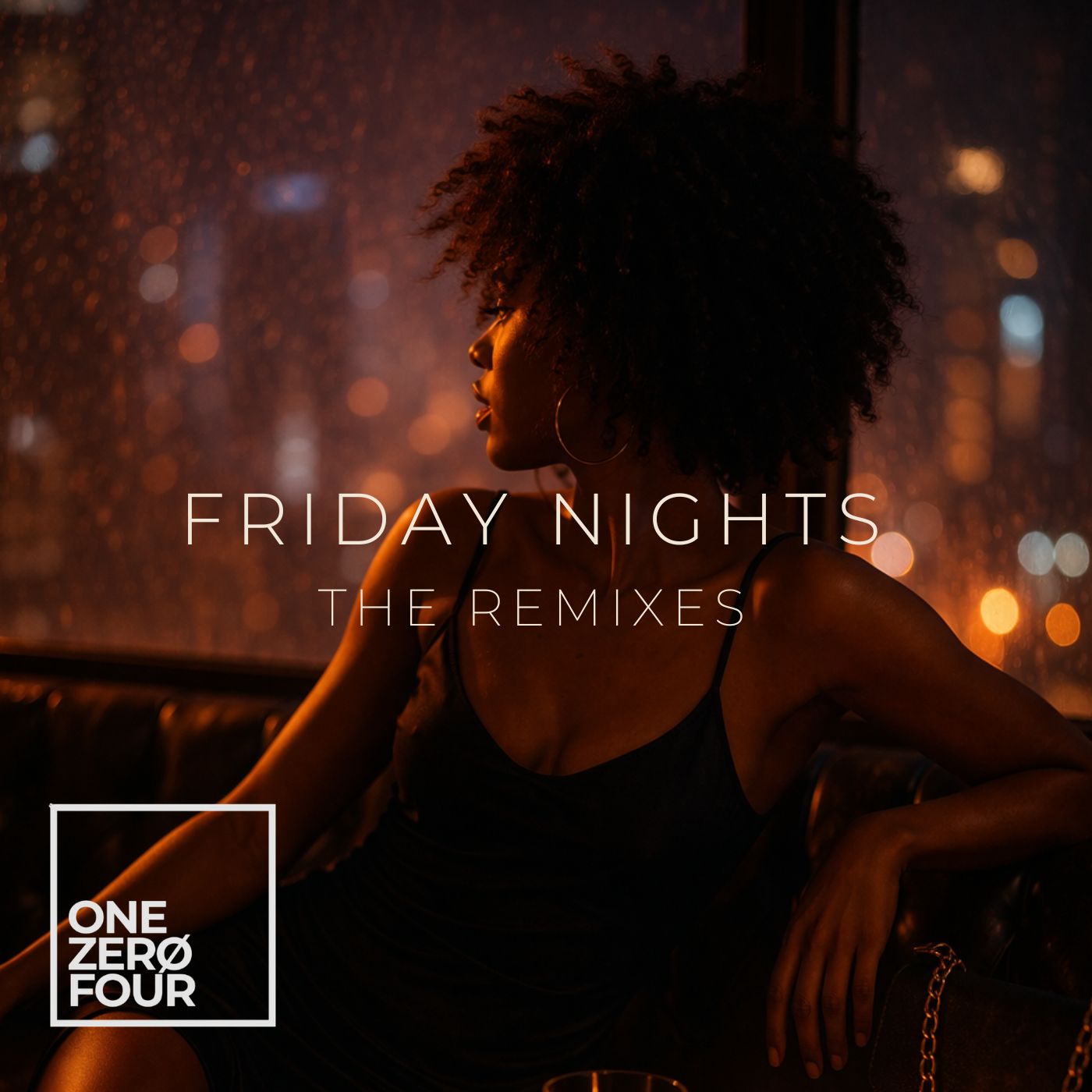
The collection / EP · House
Friday Nights (The Remixes)
- Released
- Apr 2, 2026
- Tracks
- 5 · 28:01
- Genre
- House
Five house reinterpretations tracing a woman's night out — from anticipation through heartbreak to liberation and dawn. Drawing from the wells of New York's King Street, Detroit's basement soul, Chicago's piano house joy, and the spiritual depth of Body & Soul, this collection transforms nu-disco storytelling into timeless house music. Each track carries the emotional weight of its source while speaking the language of the underground: warm Rhodes, dusty drums, tribal percussion, gospel piano, and vocals that float through the mix like memories. A journey from Friday night's first heartbeat to Saturday morning's quiet peace. For dancefloors that understand the night is more than just a party.
Tracklist
-
01 Lights Come On (KS Dub)
123C minor06:04
Buy
The night begins on King Street. This dub strips the original's Friday night anticipation down to its essence — a heartbeat kick, rolling congas, and vocal fragments that float through the mix like excitement you can't quite name. The MAW influence runs deep here: Louie Vega's warmth in the Rhodes, the Nuyorican Groove in the percussion, that unmistakable feeling of New York at dusk when the city starts to glow. Sandy Rivera's emotional depth meets Miguel Migs' West Coast warmth in a production that's more felt than heard. The vocal — once a full-throated declaration of intent — becomes texture, becomes rhythm, becomes the pulse of getting ready, of possibility, of doors about to open. Six minutes of anticipation. The groove knows what's coming even if you don't. For the dancefloors that understand: the journey is the destination.
-
02 He Don't See Me (Detroit Deep Mix)
129A minor04:36
Buy
She's standing by the bar. Same spot. Same dress. Same hope. This Detroit reinterpretation transforms longing into groove, invisibility into atmosphere. Moodymann's dusty soul drifts through every bar — the drums raw and unpolished, the Rhodes chords lonely, a muted trumpet appearing like a memory you can't shake. Theo Parrish's patience lives here: long sections where the groove simply is, where waiting becomes meditation, where the bass aches in sympathy. The vocal fragments float through vinyl crackle and tape hiss — isolated words surfacing then sinking back into the mix. "See me..." she whispers, but the groove already knows he won't. It holds her anyway. This is house music as introspection. The basement as confessional. Rick Wilhite's 3 Chairs warmth wrapping around loneliness until it almost feels like home. For those who've ever watched from the shadows. The groove understands.
-
03 One More Dance (Tribal Soul Dub)
122G# minor06:10
Buy
Last call approaches. The lights will come up soon. What was desperate pleading in the original becomes something deeper here — a prayer set to polyrhythm, desperation transformed into spiritual reach. DJ Gregory's Faya Combo percussion courses through this mix: congas that converse with the vocal, djembe accents that punctuate the longing, shakers that mark time running out. But there's warmth here too. Sandy Rivera's soulful depth, Kings of Tomorrow's gospel release — the breakdown swells with strings that promise even if time runs out tonight, there will be other nights, other chances, other dances. The groove holds space for both the desperation and the hope. "One more dance..." loops through the mix — not mechanical repetition but mantra, prayer, the words we say when we need the universe to hear us. For the 4am moments when the groove is all that's holding you together.
-
04 Walk Away (Chicago Soul Mix)
123B major05:07
Buy
She's done. And she's never felt more free. This Chicago reinterpretation explodes with Marshall Jefferson's piano house joy — bright major-key stabs that announce liberation, gospel runs that climb like shackles falling away. The raw 909 drives forward while Carl Craig's Detroit sophistication adds depth beneath the celebration, strings that know this freedom was earned, not given. Danny Krivit's Body & Soul warmth fills the room as congas join the party. Pete Heller's "Big Love" lives in that bassline — round, warm, unstoppable. The vocal transforms from defiant statement to joyful declaration: "Walk away!" becomes less about leaving him and more about finding herself. This is house music as liberation theology. The piano stab as hallelujah. Chicago and Detroit meeting in the middle to build a cathedral of groove where she finally sees herself clearly. For everyone who ever walked out the door and never looked back.
-
05 Dawn (Sunrise Spiritual Dub)
112C minor06:04
Buy
The city is quiet now. Birds are singing. She's still standing. This closing meditation strips everything back to essence — Kerri Chandler's spiritual depth, Joe Claussell's Body & Soul transcendence, the sound of a soul that's been through the night and emerged whole. The groove barely whispers: pillowy kicks, brushed percussion, Rhodes chords that glow like the sky turning pink. The vocal fragments drift through reverb canyons — "Dawn breaks... and so do I... I'll be alright..." — words becoming breath, breath becoming silence, silence becoming peace. The key shifts from E minor's darkness to G major's warmth as the sun rises, as acceptance arrives, as the night's journey resolves into morning. Seven minutes of healing. The dancefloor as sanctuary. The groove as prayer answered. For the walk home. For the sunrise. For everyone who made it through.
Sleeve notes
Friday Nights: A Deep House Journey from Dusk to Dawn
How a nu-disco concept EP became a love letter to house music's roots
---
There's a story that plays out every weekend in cities around the world. A woman gets ready, full of hope. She goes out. She watches someone who doesn't watch back. She reaches for connection, finds rejection, discovers herself, and walks home at sunrise somehow more whole than when she left.
Friday Nights tells that story — but not with words. With groove.
---
The Origin
The project began as a nu-disco collection in the classic tradition: Donna Summer's heartbreak, Gloria Gaynor's defiance, the way disco always let you dance through your tears. Five tracks following a single night's emotional arc, from the anticipation of "Lights Come On" through the longing of "He Don't See Me," the desperation of "One More Dance," the empowerment of "Walk Away," and finally the peaceful resolution of "Dawn."
But something happened in translation. The stories demanded different voices. Deeper voices. The kind of voices that don't just describe feelings but become them.
---
The Transformation
What emerged is a collection that reads like a map of house music's spiritual geography.
Track 1 opens in New York, on King Street specifically — that stretch of Manhattan where Masters at Work built a sound that married Latin percussion to disco's soul, where Louie Vega's productions taught a generation that house music could make you cry. The "Lights Come On (King Street Dub)" channels this directly: rolling congas, warm Rhodes, vocal fragments that capture Friday night's anticipation without ever spelling it out.
Track 2 travels to Detroit, to the basements where Moodymann and Theo Parrish developed a strain of house music that's more felt than heard. "He Don't See Me (Detroit Deep Mix)" transforms its source material's unrequited longing into something almost meditative — dusty drums, lonely vibraphone, vocal phrases floating through vinyl crackle like thoughts you can't shake. It's the sound of watching from shadows, of patience that's almost painful, of grooves that ache.
Track 3 draws from multiple wells — DJ Gregory's Afro-Brazilian Faya Combo productions, Sandy Rivera's emotional depth, the gospel release of Kings of Tomorrow's "Finally." The "One More Dance (Tribal Soul Dub)" turns desperate pleading into spiritual reach, congas and djembe carrying the weight of time running out while strings promise redemption.
Track 4 explodes into Chicago, where Marshall Jefferson invented piano house and taught the world that dance music could be joyful, triumphant, free. The "Walk Away (Chicago Soul Mix)" pairs those bright piano stabs with Carl Craig's Detroit sophistication, Danny Krivit's Body & Soul warmth, Pete Heller's round basslines. It's liberation as groove, empowerment as four-on-the-floor.
Track 5 closes the journey with sunrise — Kerri Chandler's spiritual depth, Joe Claussell's transcendent DJ sets, the sound of having survived the night. "Dawn (Sunrise Spiritual Dub)" barely whispers: gentle percussion, Rhodes that glow, vocal fragments dissolving into reverb as the key shifts from minor to major, from darkness to light.
---
The Geography of Feeling
What makes this collection work is its understanding that house music has always been emotional music — that the genre's roots in Black and queer communities gave it a depth that purely functional dance music lacks. Each track here draws from specific traditions:
New York contributes the Latin influence, the live percussion, the feeling of city streets at dusk.
Detroit adds introspection, jazz sophistication, the willingness to sit inside difficult feelings.
Chicago brings joy and release, the gospel roots, the piano as instrument of liberation.
The African diaspora runs through everything — in the polyrhythms, in the call-and-response, in the understanding that dance is spiritual practice.
---
The Production Approach
Technically, each track follows a similar philosophy: strip the original vocal to fragments, let the groove carry the emotion, create space for the dancefloor to fill in what's left unsaid.
The vocals here aren't sung so much as discovered — phrases emerging from the mix, looping with space around them, becoming texture as much as text. "See me..." floats through Track 2's vinyl haze. "One more dance..." repeats like a mantra in Track 3. "Walk away!" punctuates Track 4's piano runs. The words mean less than how they feel.
The productions share DNA but never sound identical. Track 1's New York polish gives way to Track 2's deliberate lo-fi roughness. Track 3's tribal warmth contrasts with Track 4's bright Chicago energy. Track 5 strips everything back to essence: a kick drum like a heartbeat, pads like breath, the groove as meditation.
---
The Emotional Arc
Listen from start to finish and you hear a complete journey:
Track 1: Hope, possibility, the night opening up.
Track 2: Longing, invisibility, watching from shadows — the emotional valley.
Track 3: Desperation, reaching, last chances — the stakes rising.
Track 4: Liberation, self-discovery, joy — the breakthrough.
Track 5: Peace, acceptance, resolution — the landing.
It's a structure borrowed from classical drama but expressed entirely through rhythm and space. The BPMs tell part of the story: 122 to open, dropping to 119 for the introspective second track, returning to 122 for the central trilogy, then settling to 112 for the closing meditation. Energy rises and falls like breath.
---
For the Dancefloor, and Beyond
These tracks work as DJ tools — the intros and outros are built for mixing, the energy levels are calibrated for programming, the grooves lock and hold. A DJ could build a two-hour set using these five tracks as anchors, filling the spaces with complementary selections.
But they also work as listening music, as emotional architecture, as the kind of deep house that rewards attention without demanding it. Put them on while cooking dinner and they become atmosphere. Put on headphones at midnight and they become transportation.
---
The Lineage
Every producer here would recognise their influence: Vega and Gonzalez, Moodymann and Parrish, Jefferson and Craig, Gregory and Rivera, Chandler and Claussell. The goal was never originality for its own sake but rather continuation — adding a small chapter to traditions built over decades.
House music has always been a conversation across time. The four-on-the-floor beat is a thread connecting disco's birth to this morning's sunrise set. These five tracks join that thread, speaking to what came before while hopefully saying something new.
---
Friday Nights
In the end, it's a simple story. Everyone knows it. You get ready. You go out. Things happen — some good, some painful, all real. You survive. You find your way home. The sun comes up.
The groove holds you through all of it.
That's what house music has always done. That's what Friday Nights does for 35 minutes: holds space for the full range of human experience, from anticipation to heartbreak to liberation to peace, all without ever losing the beat.
The dancefloor as therapy session. The groove as friend. The night as teacher.
Friday nights, indeed.