Track Gallery
Tracks and Variations
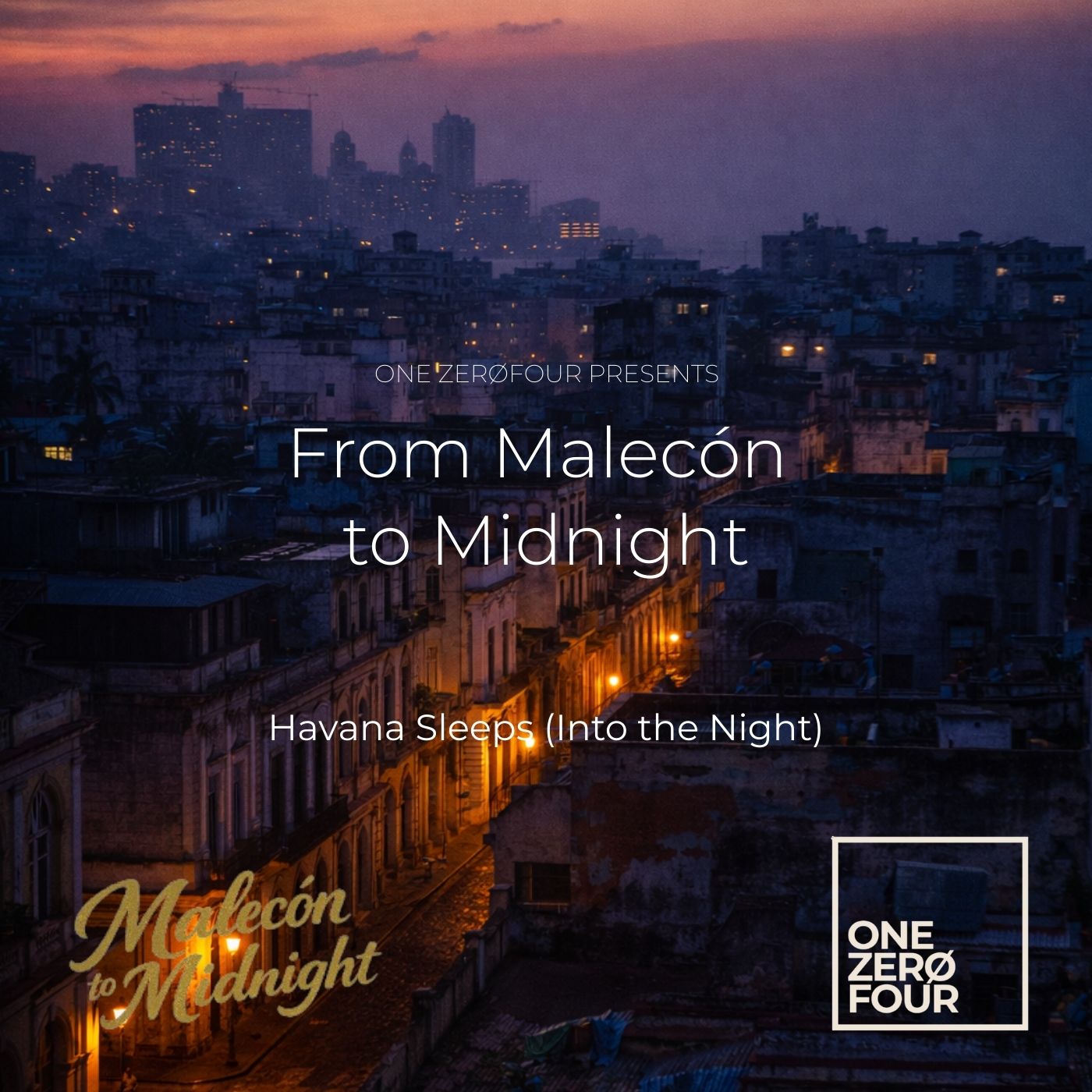
Featured track: Havana Sleeps (Into the Night)
Editorial
Release Story
Malecón to Midnight
A conceptual journey from sunlit Havana to the underground after-hours
The Spark: A Forgotten House Record
The album began not in Havana, but in memory.
A long-forgotten Cuban-influenced house track resurfaced — one of those 90s Latin house records where congas sat against a 909 kick and the clave was felt rather than explicitly stated. That rediscovery triggered a question:
What if the journey ran in reverse?
Instead of starting in the club and adding Latin flavour, what if we began in the street — in the sun, in the bolero, in the nylon string guitar — and slowly drifted toward the underground?
The result became Malecón to Midnight: a day-to-night narrative tracing Cuban identity from its acoustic roots into electronic abstraction.
Cultural Grounding: Respecting the Source
The research phase focused on the mechanics of Afro-Cuban house and garage — clave logic, tumbao bass phrasing, layered congas, swing ratios, portamento bass slides
Key principles shaped the entire album:
- Clave is implied, not forced
- Percussion breathes (±8–12ms humanisation)
- Basslines move root/fifth with subtle slides
- Percussion intros before kicks
- Swing at 62–65% on hats and shakers
But the album goes deeper than club technique.
Cuban music itself is a fusion:
- Spanish guitar and harmonic minor phrasing
- West African polyrhythm and call-and-response
- Santería spiritual invocation (Yemayá, Ochún)
- Street rumba, guaguancó, descarga improvisation
- Jazz influence through filin and post-revolution Havana
Even without having visited Cuba, the aim was not imitation — but dialogue.
This is an imagined Havana: filtered through UK trip-hop, garage shuffle, and warehouse minimalism.
The Arc: From Light to Shadow
The album is structured as a four-phase journey.
Phase I — Morning Sun (Acoustic & Organic)
The opening tracks live in daylight.
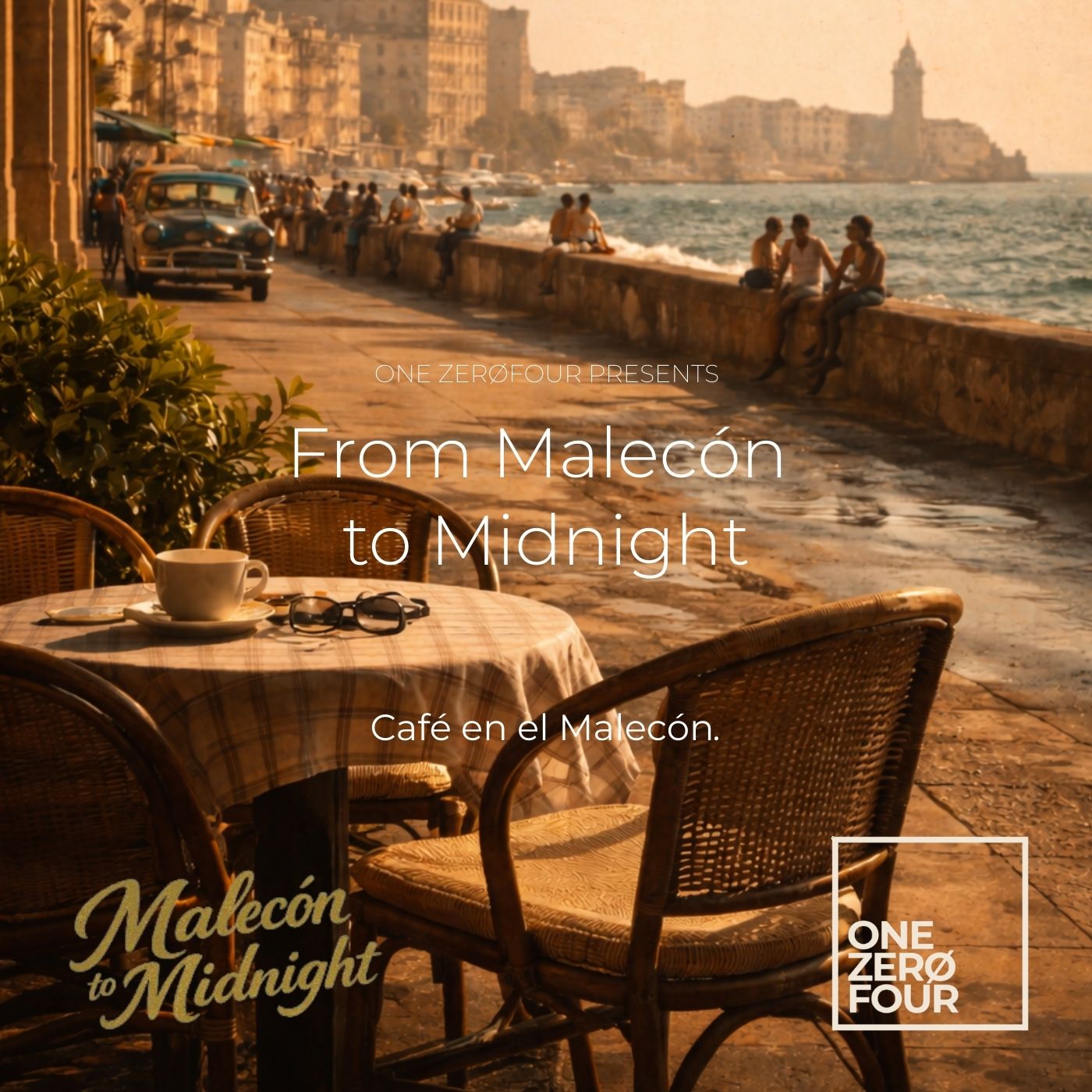
“Café en el Malecón” is rooted in son and trova traditions. Nylon guitar, upright bass tumbao, muted trumpet — intimate male baritone vocals with breath audible. Vinyl hiss, tube warmth. No synths. No electronic drums.
It captures the Malecón — Havana’s seawall, often called “the city’s sofa.” It is where romance, music, and daily life converge.
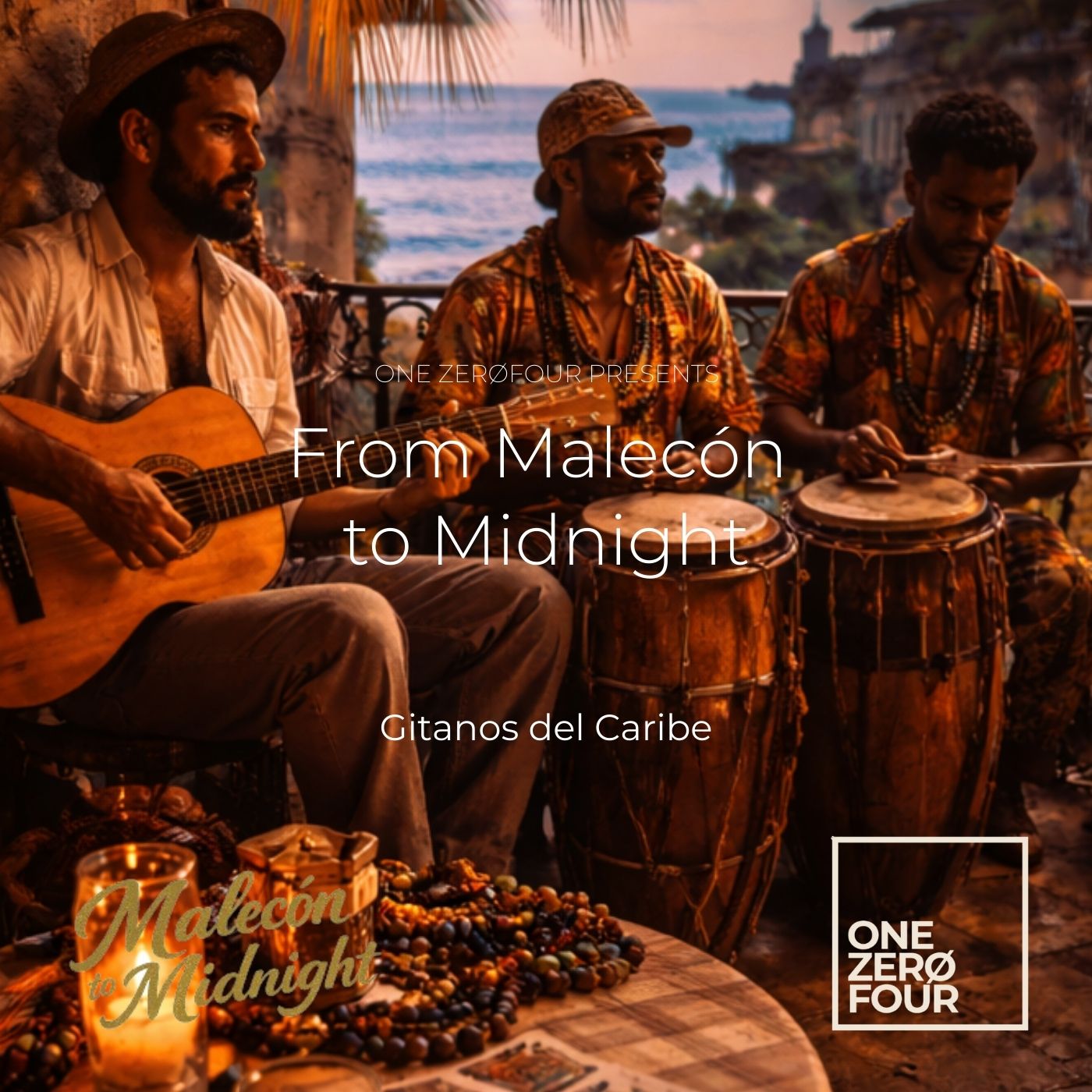
From there, “Gitanos del Caribe” explores Spanish-style phrasing over Afro-Cuban 6/8 polyrhythm — flamenco tension meeting bembé ritual pulse.
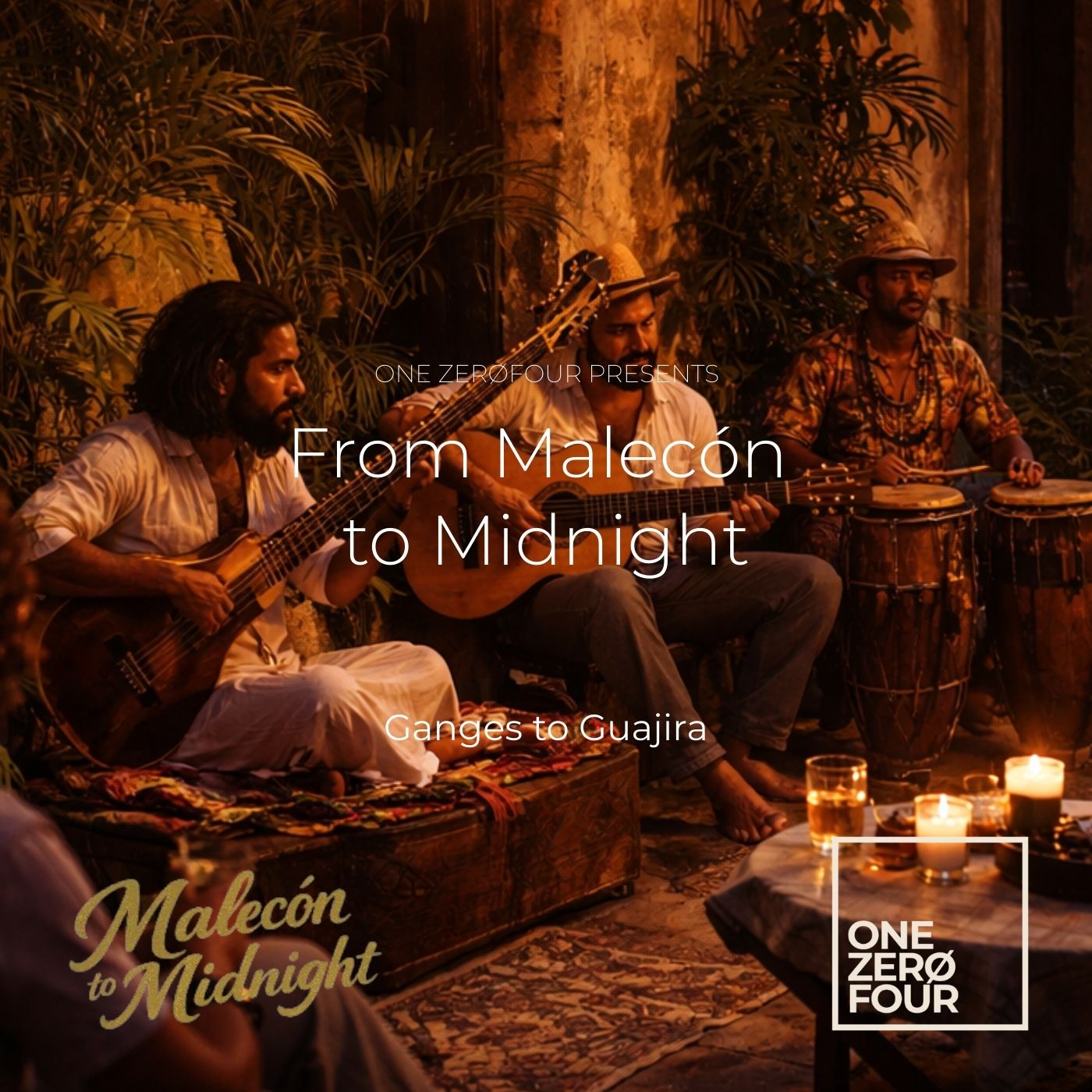
“Ganges to Guajira” introduces modal crossover — drawing parallels between Indian raga phrasing and Cuban guajira rural folk tonality.
This first act is organic, human, sunlit.
No kick drums. No drops.
Phase II — Golden Hour (Lounge & Deep)
As the sun lowers, minor keys appear.
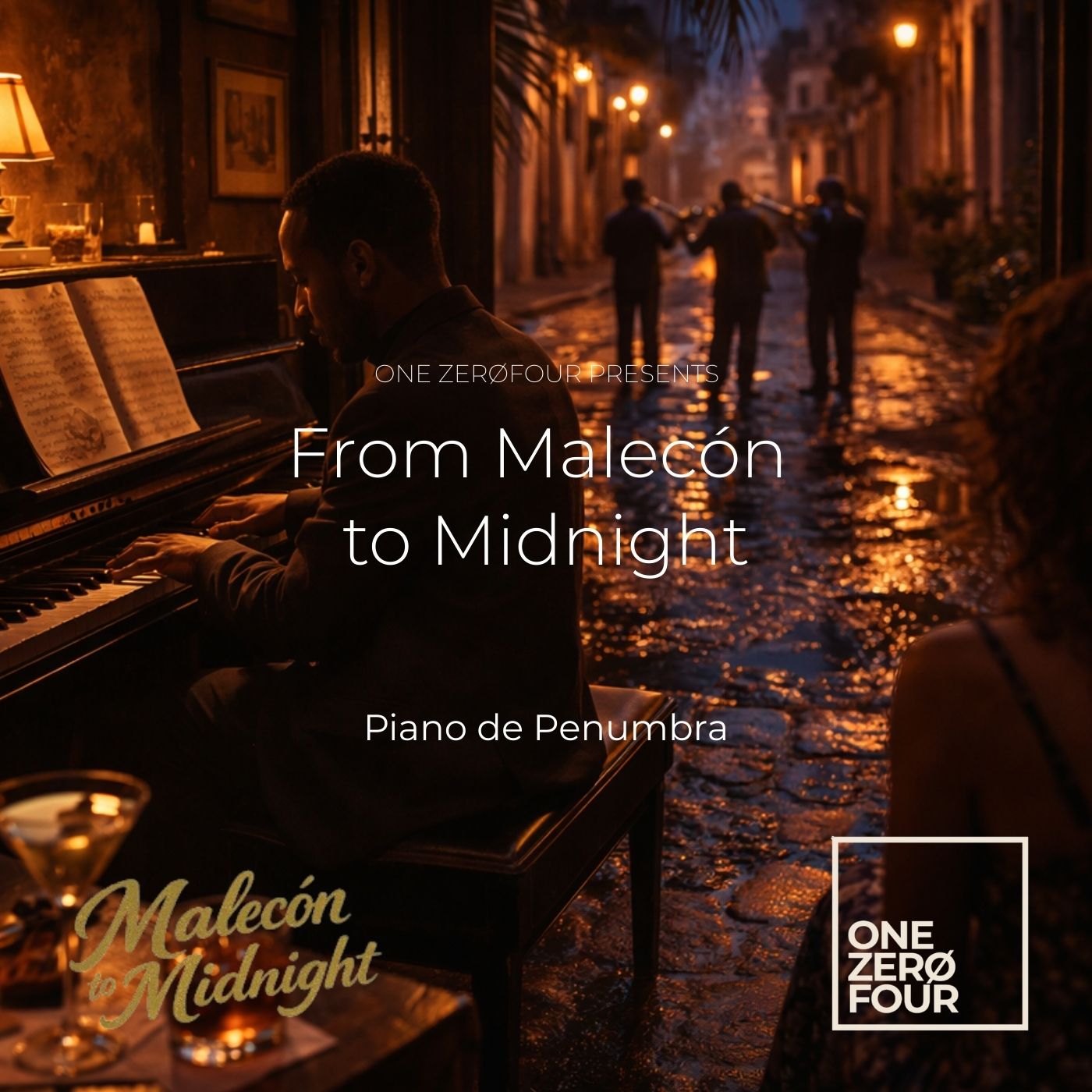
“Piano de Penumbra” blends Cuban montuno with UK trip-hop restraint. Rain ambience. Vinyl crackle. Modal interchange. Jazz extensions. The piano sits behind the beat while percussion holds the pocket.
It feels like Havana through London drizzle.
“Havana Sleeps (Into the Night)” begins the electronic transition. Acoustic arpeggios dissolve into filtered synths. The same lyrical theme — “La Habana duerme…” — is reframed under progressive house tension.
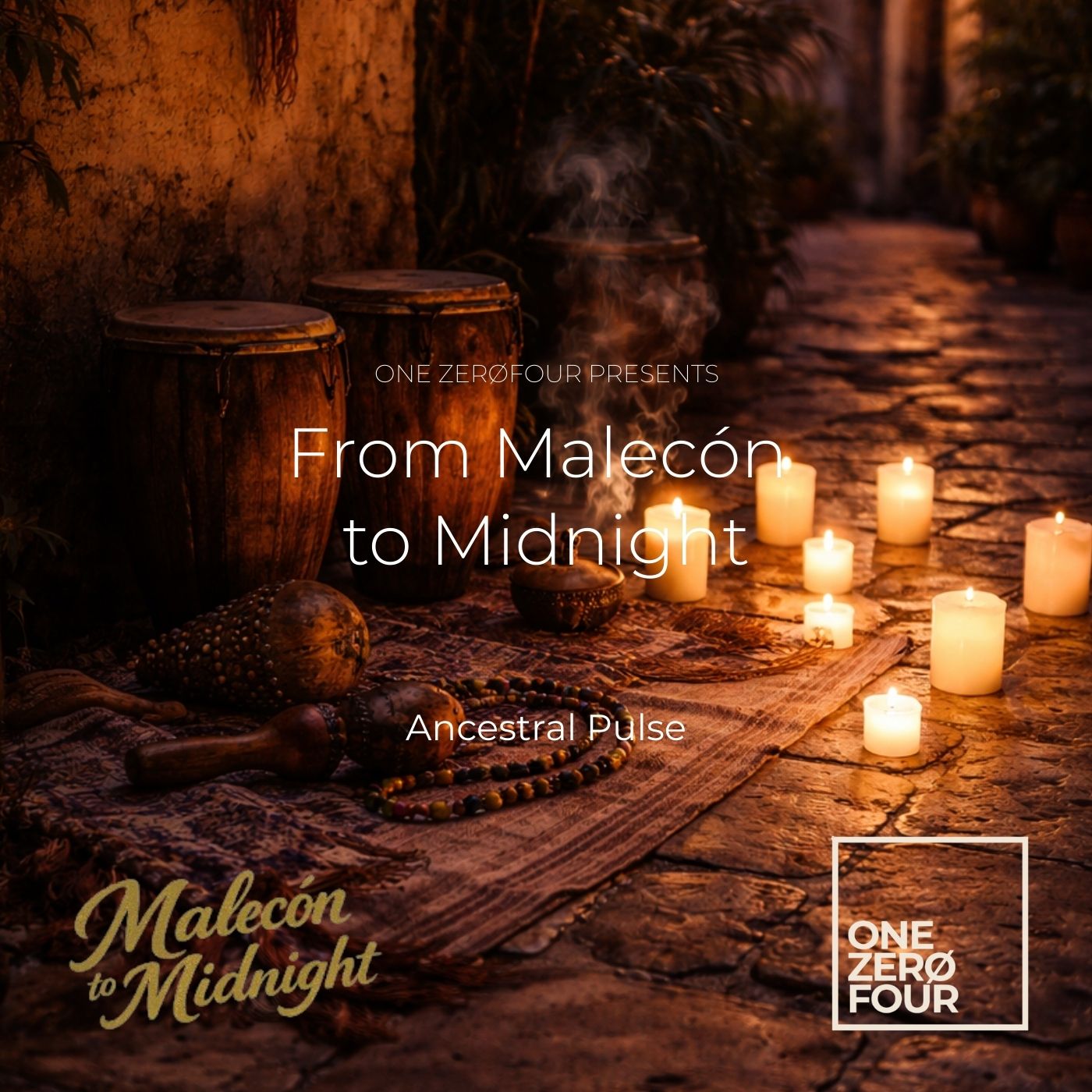
“Ancestral Pulse” brings Afro-House spirituality forward. Yemayá (mother of the sea) and Ochún (goddess of love and fresh waters) are invoked not theatrically, but rhythmically. Dry conga tumbao, Moog sine bass, piano montuno cycle.
This phase is transitional — reverent but moving.
Phase III — Late Night Peak (Heat & Momentum)
Now the kicks dominate.
The Cuban Fire trilogy escalates in intensity:
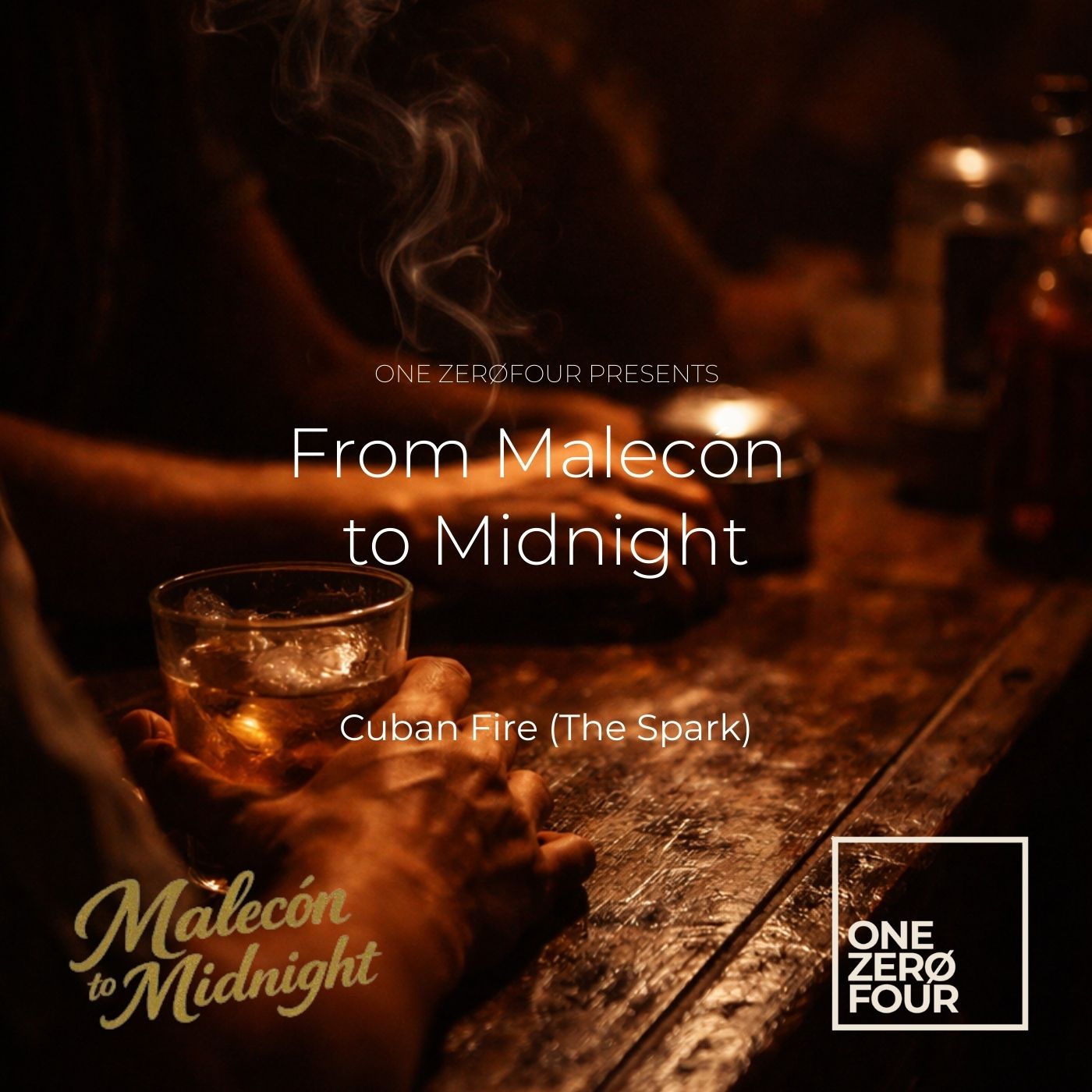
- The Spark — melodic Latin house
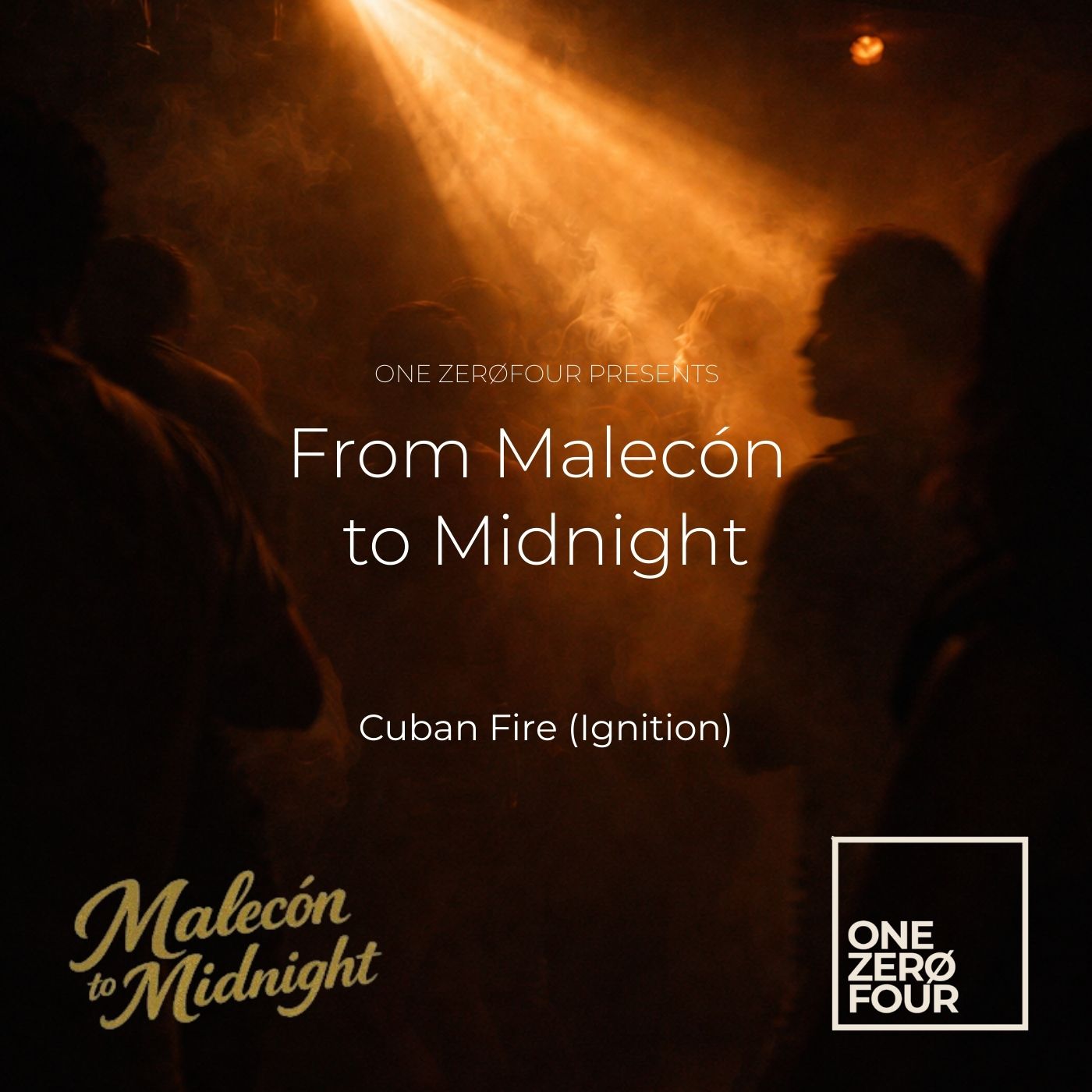
- Ignition — harder tech house edge
- White Heat — hybrid bass pressure
Here the Cuban tres becomes a synth pluck.\ The conga becomes texture.\ The clave becomes ghosted in percussion sidechain.
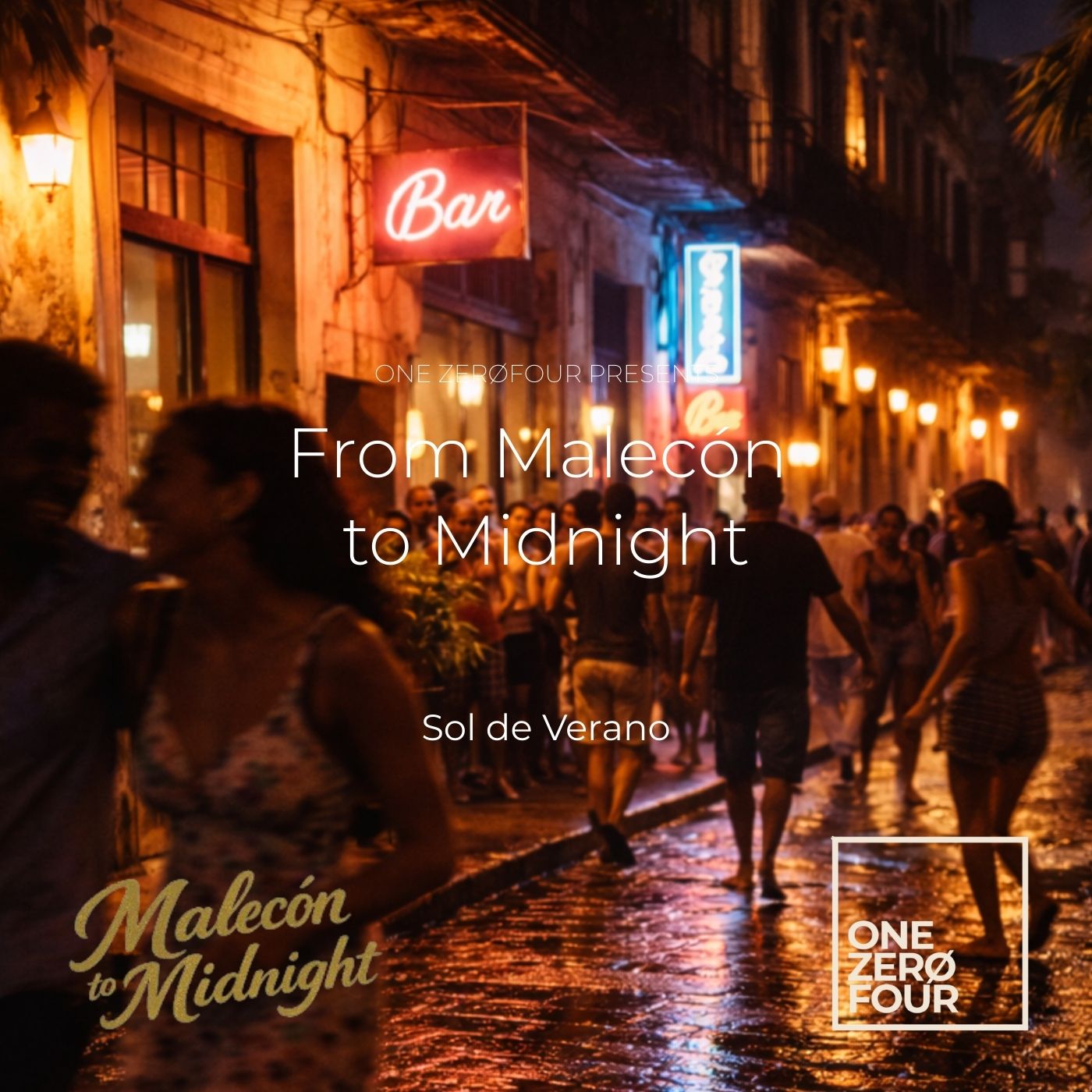
“Sol de Verano” embraces club brightness — intentionally catchy, almost “Ibiza,” yet still grounded in Caribbean identity.
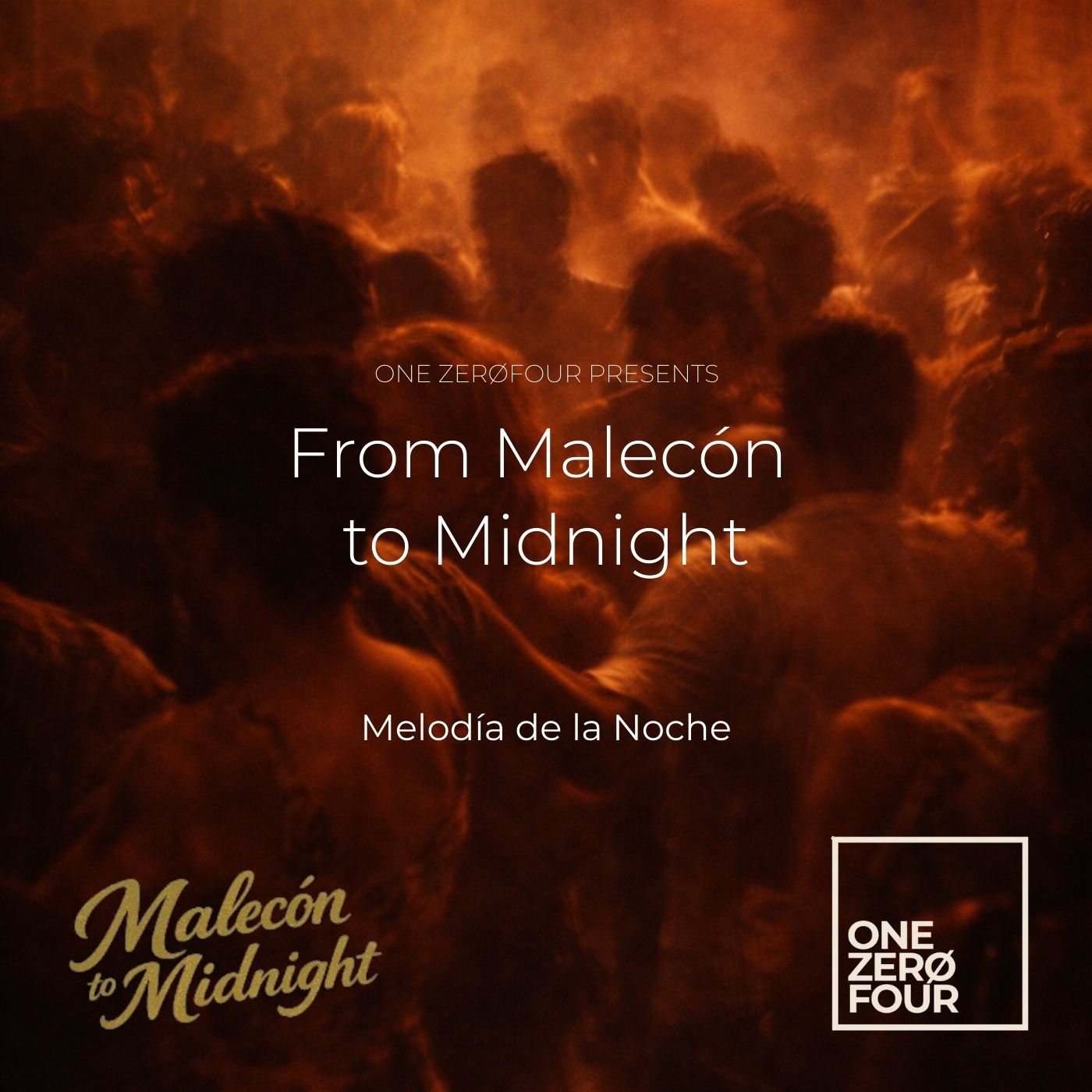
“Melodía de la Noche” pulls back toward deeper, more hypnotic melodic house.
This is where Havana meets warehouse London.
The percussion remains Afro-Cuban in phrasing — but the architecture is European club logic.
Phase IV — After-Hours (Minimal & Underground)
The final act strips things back.
Bomba rhythms (Afro-Puerto Rican dance tradition where dancer commands drummer) morph into hypnotic tech tools.
Guaguancó’s flirtatious street rumba tension is translated into minimal bass stabs.
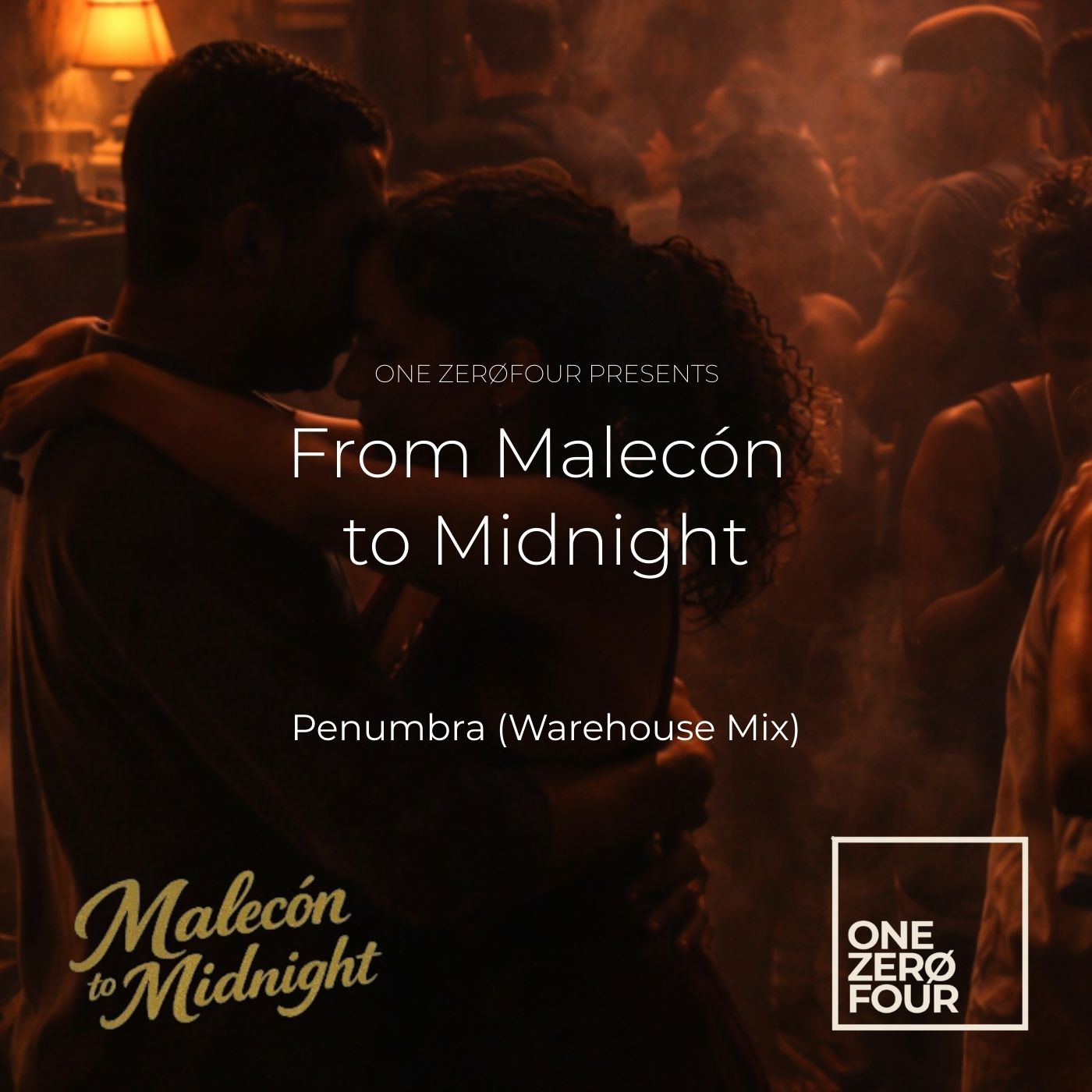
“Penumbra” becomes pure shadow — sub-pressure, filtered percussion, space.
And finally:
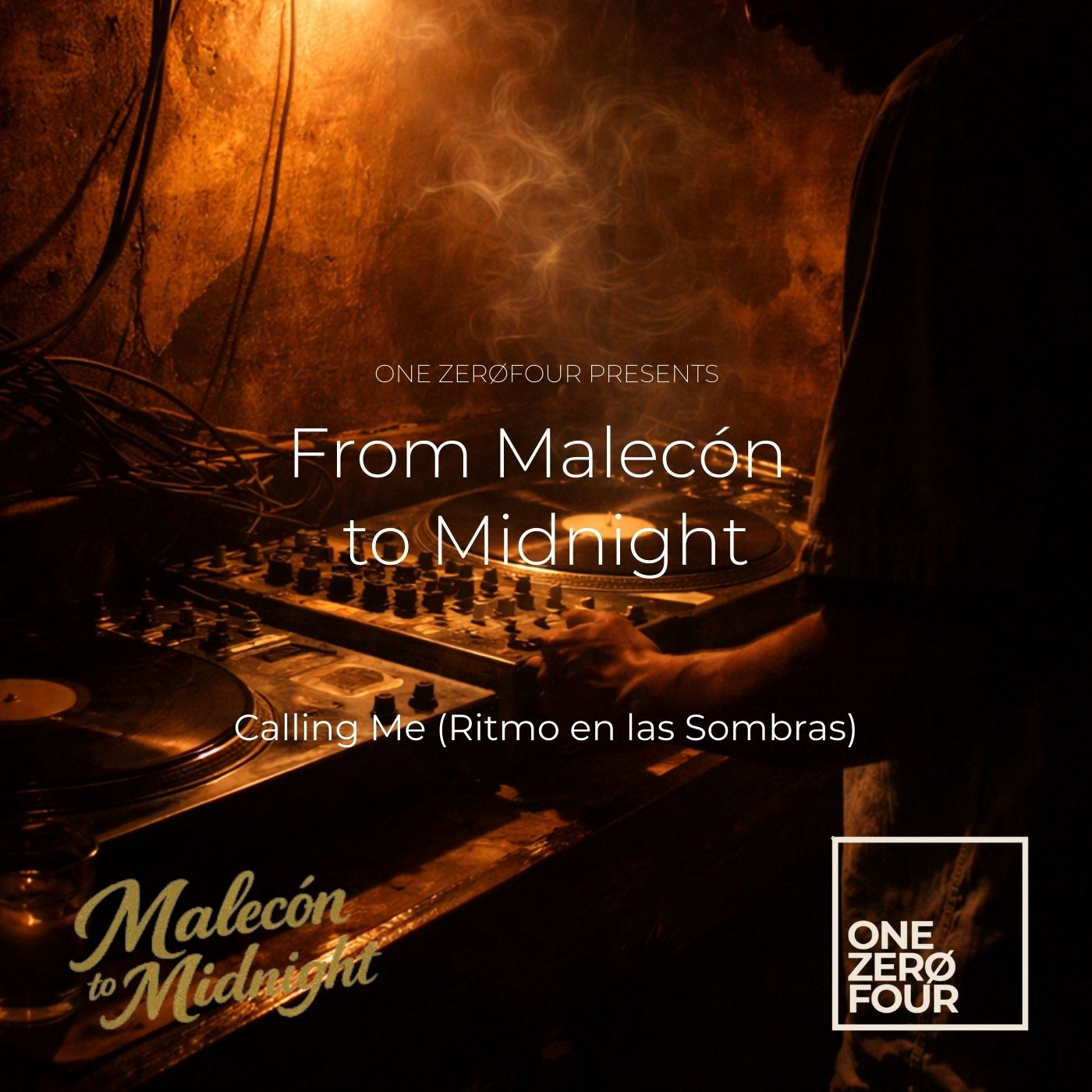
“Calling Me (Ritmo en las Sombras)”
2-step shuffle.\ Urban bass weight.\ Spanish and English intertwined.\ “Inherited pride… Havana to London — one rhythm.”
The album closes not in Havana — but somewhere between continents.
Malecón to Midnight is not an attempt to recreate Cuba, nor to imitate its traditions from afar. Instead, it is a conversation — between Son Cubano and UK garage, between guaguancó and warehouse tech house, between Santería’s ancestral pulse and the pressure of modular sub-bass. It traces how rhythm travels: from acoustic street corners to underground club basements, from live tumbao to sidechained sine waves, from whispered bolero to shuffled 2-step.
What began with the rediscovery of a Cuban-influenced house record evolved into a full day’s imagined arc — sunlight on the Malecón giving way to neon and shadow at midnight. The album holds both spaces at once: warmth and darkness, tradition and experimentation, Havana and London. In the end, it becomes less about geography and more about continuity — one rhythm, moving through time, light into shadow.
Recommended Listening
Other Tracks
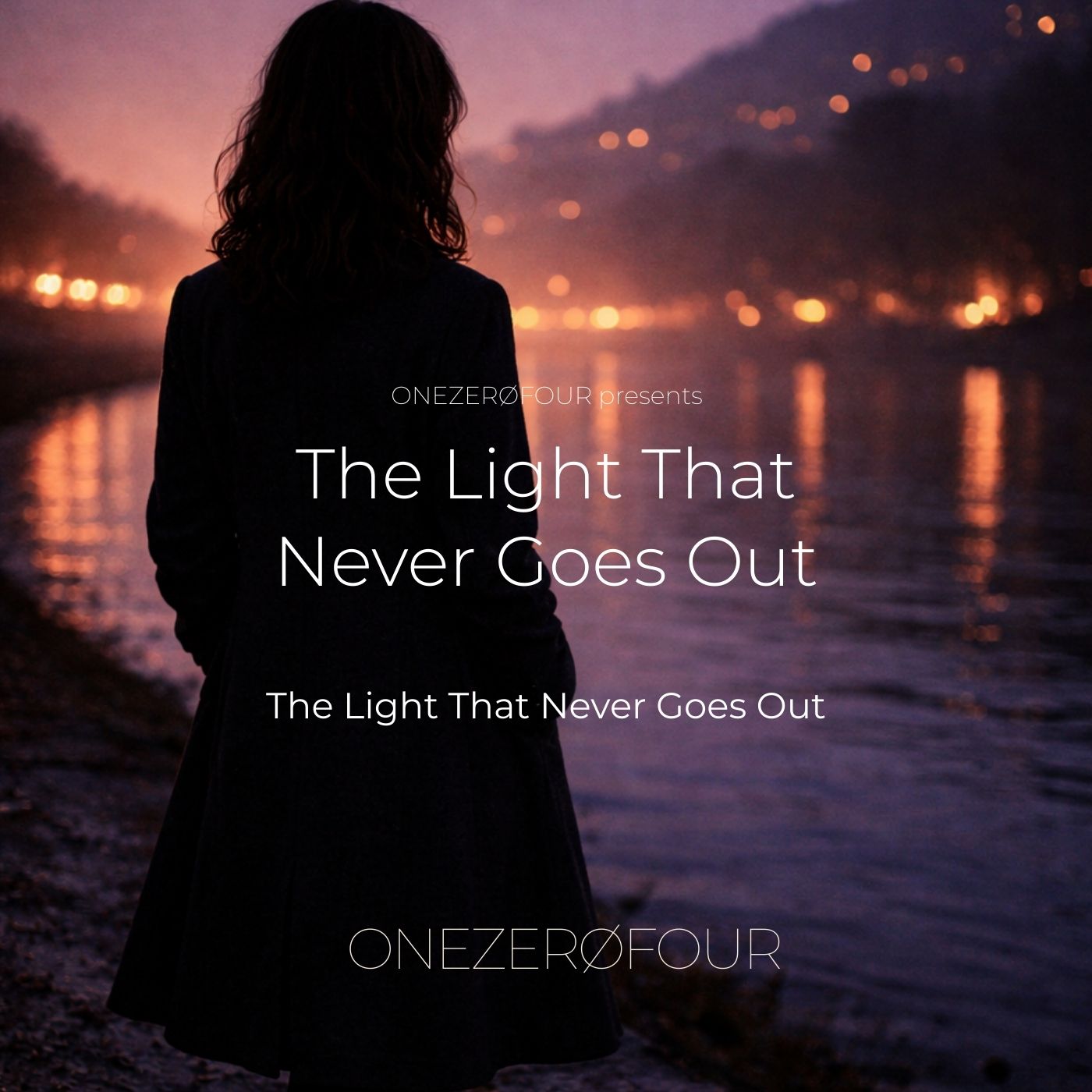
The Light That Never Goes Out
152.00 BPM / G major
Downtempo / Electronic / Trip-Hop
The album’s central axis. A steady, persistent presence emerges — not as hope or resolution, but as endurance. Balanced, grounded, and quietly resolute.
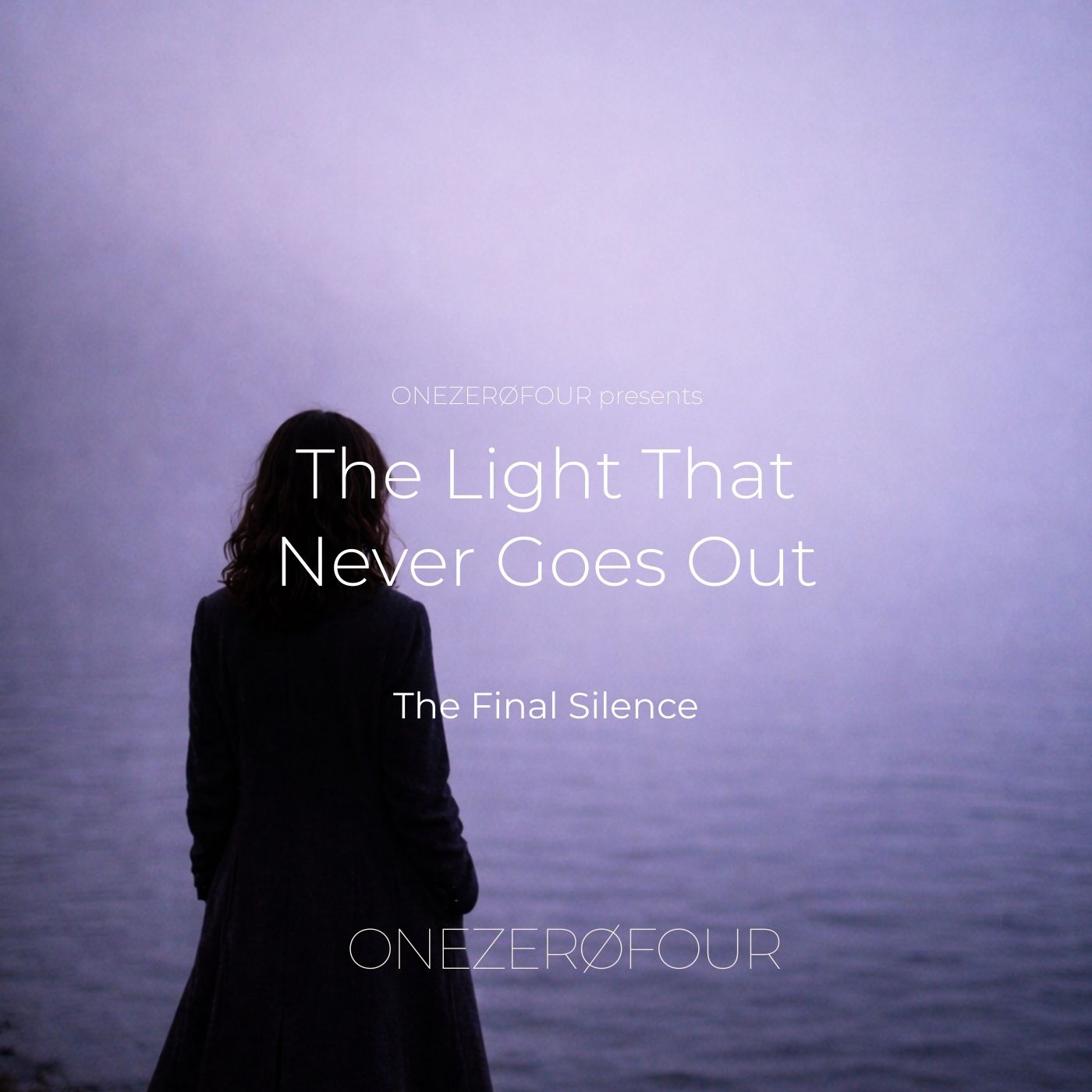
The Final Silence
123.05 BPM / A minor
Downtempo / Electronic / Trip-Hop
Space opens up. Sound recedes. The track rests in stillness, allowing the weight of what’s come before to settle without explanation.
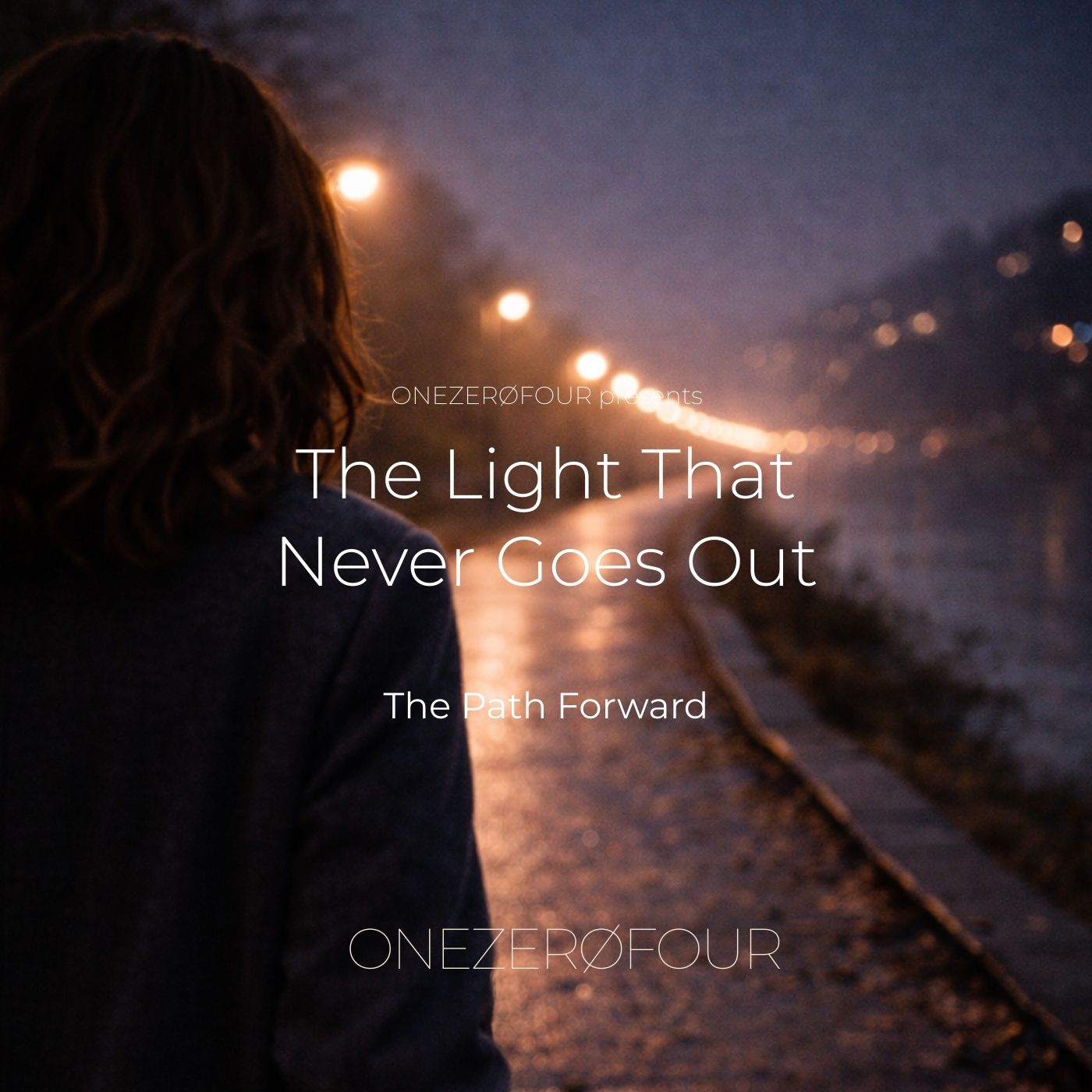
The Path Forward
152.00 BPM / A major
Downtempo / Electronic / Trip-Hop
Subtle movement enters the frame. Rhythm and direction appear without urgency, suggesting momentum rather than destination.
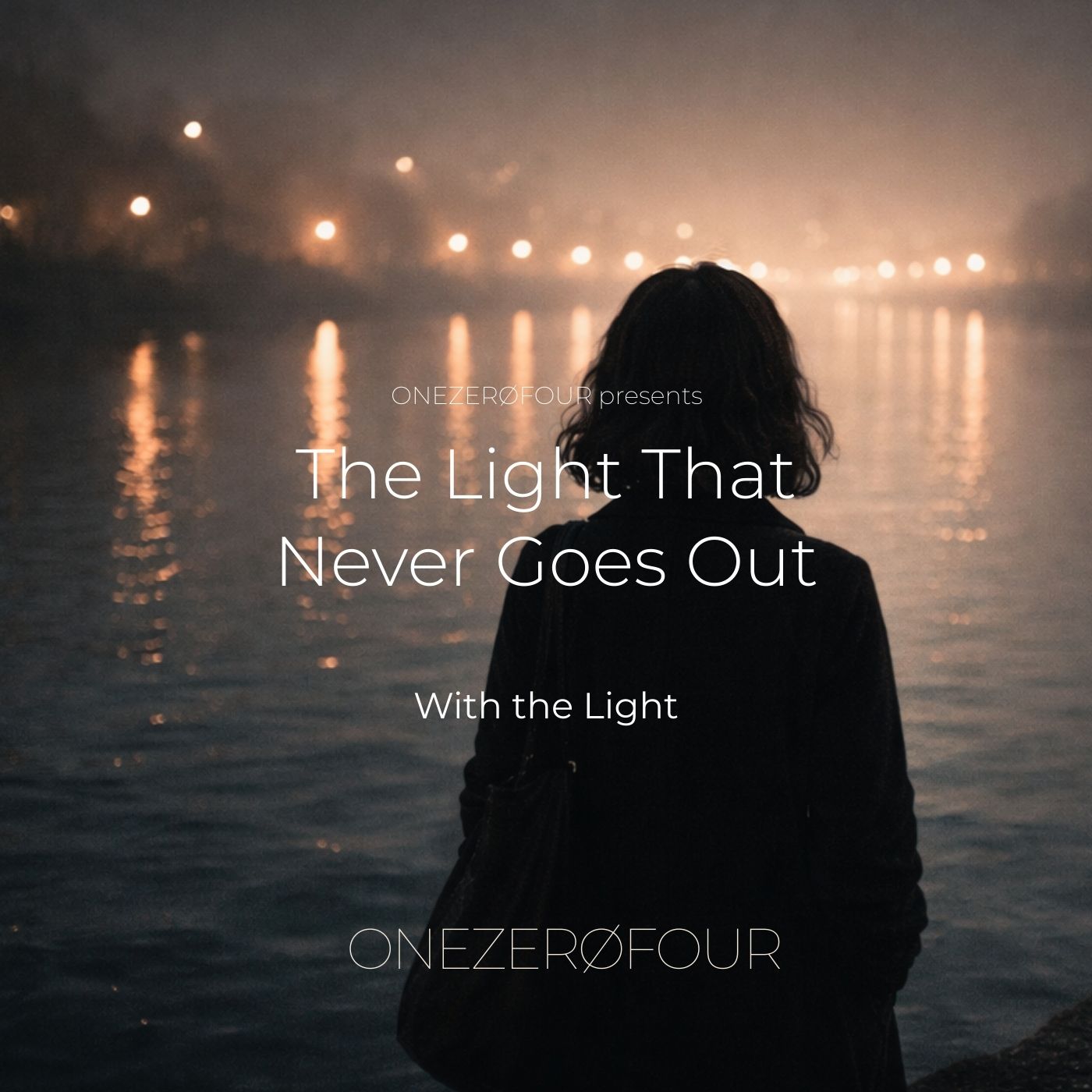
With the Light
172.27 BPM / F minor
Downtempo / Electronic / Trip-Hop
The closing track doesn’t resolve the journey — it inhabits it. Warm, steady, and quietly open, it ends the album in equilibrium rather than triumph.
Catalog Navigation